
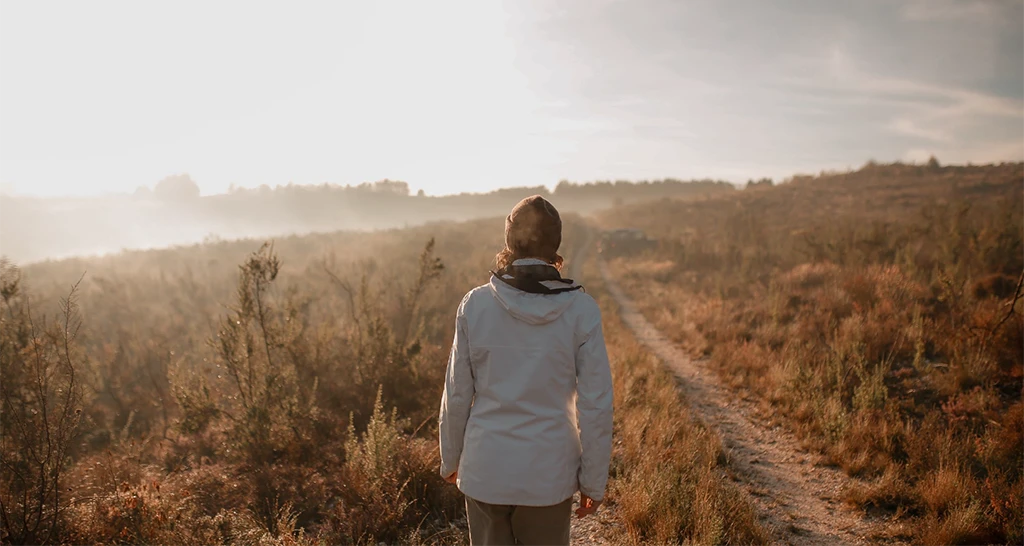
We haven’t actually completed our harvest yet, but enough has gone down for me to offer some insights on the 2025-2026 season on my little farm in the Elgin Valley, South Africa.
The weather report
Hot and dry in a nutshell. And I mean not a drop of rain from October to February. A whacking 110mls of welcome rain In the first weekend of February followed by clear cooler days working its way towards the warmest March I can remember, and now temperatures dropping off significantly as we find ourselves in mid-March.
What this meant for Brocha Vineyards
Although dry is good for grapes, vines do need water especially young vineyards which don’t have the root structure and depth to cope with a relentless summer like the one we have just had. The rain was welcome – Brocha is a dry farm. The borehole pump was starting to make some alarming noises and due to the quartz rich stony soils drainage is excellent. No split berries was the only result I wanted at this point.
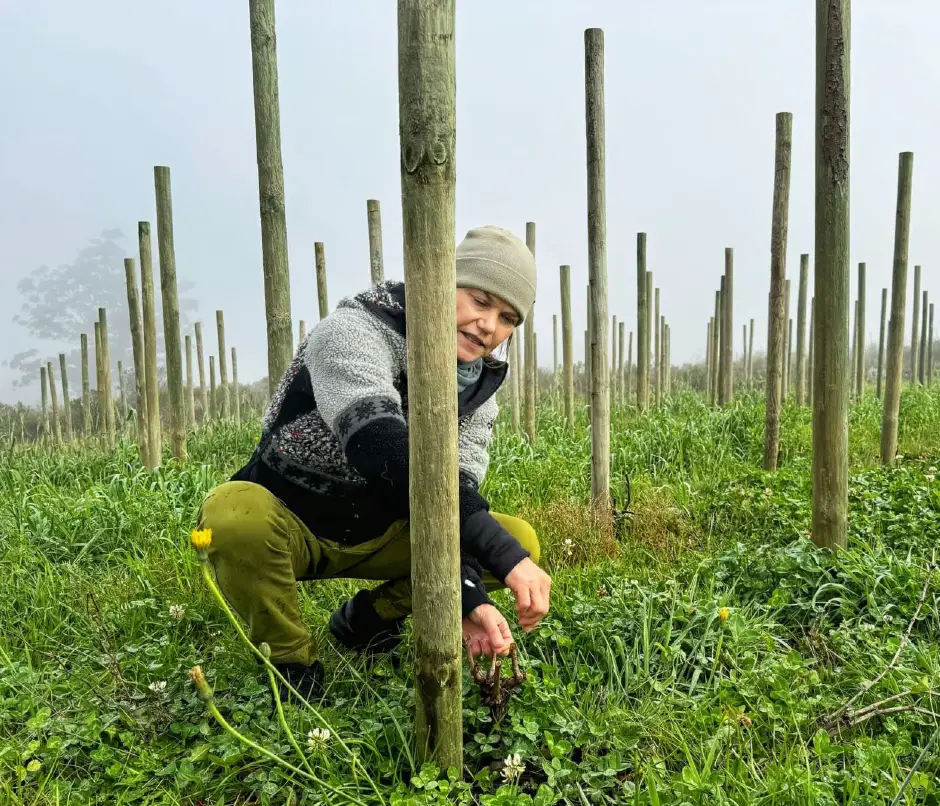
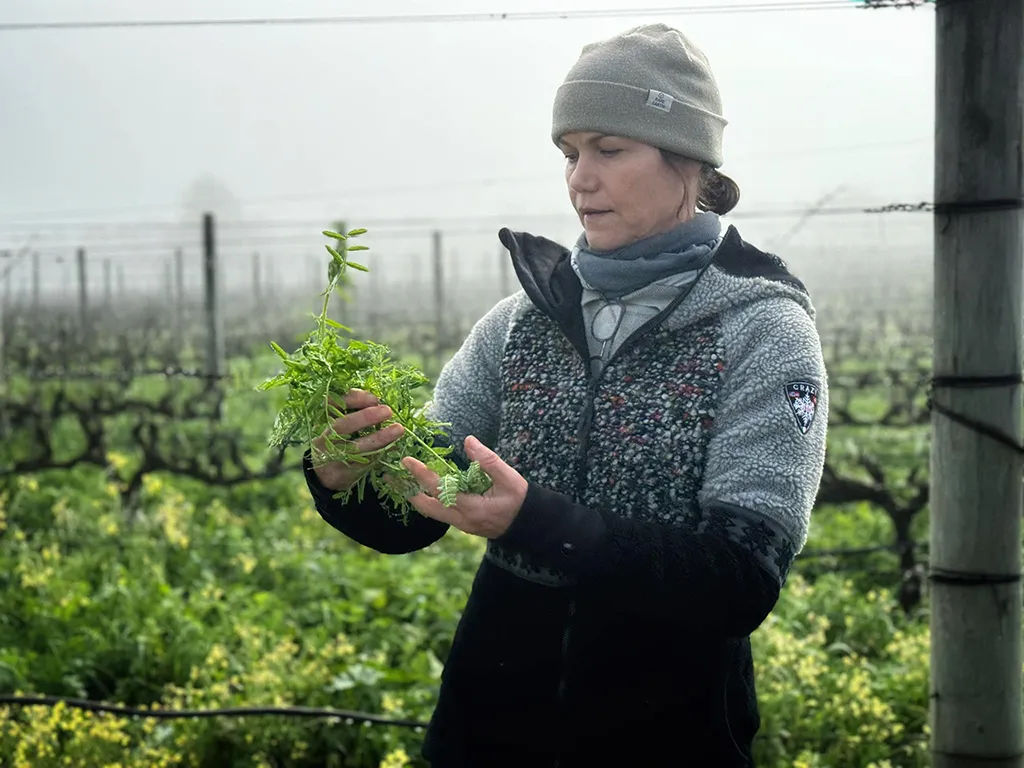
The damp soils and humid weather combined to create an incubator for undesirable things like botrytis. To put a stop to this we used bicarbonate of soda. I reckon if you can put it in a cake it can’t do too much damage in the vineyard and it serves as an excellent anti-fungal together with Trichoderma, a genus of fungi present in all soils and easily culturable, which scavenges off undesirable fungi such as downey and powdery mildew making it an effective and feel-good biological control.
It was the best ever!
My husband tells me I’m too honest, but there’s really no point in doing a harvest report if I tell you every year that everything was hunky-dory and it was our best season ever and the wine is the best wine ever, because with Mother Nature calling the shots – this is impossible. To compound matters, it appears to me that due to our rather rude treatment of the environment in the decades since the industrial revolution She is hurling a bit of vengeance on us, making the farmers task an increasingly demanding one and keeping us on our toes. But here’s the thing – it’s the little differences which make wine interesting, after all, and the very fact that it’s not a consistent product. Wine reflects the soil and the seasons, what we thought and what we did or didn’t do.
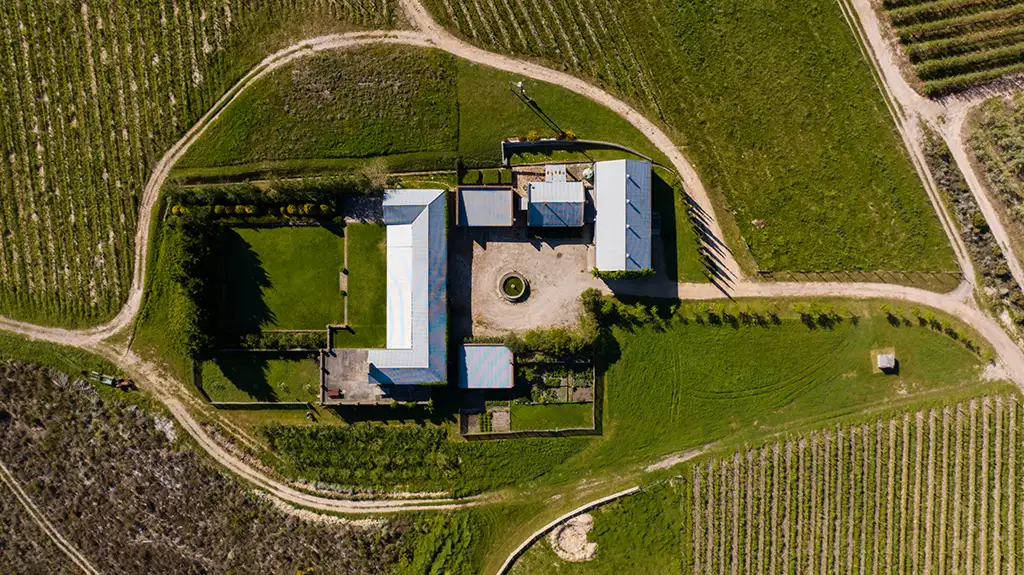
The season is what gives us something to talk about and sets one vintage apart from another – making it not necessarily better or worse, but different. In an age of increasing mediocracy, blandness and constant dumbing down, whether its information or our food, I think diversity should be celebrated. At Brocha we offer the wine drinker a confrontation with a real agricultural product that was farmed without herbicide, systemic chemicals, pesticides and industrial fertilizer producing a wine simply without enzymes for settling, industrial inoculants, fining or filtering and which embodies the peculiarities of sun, soil, the elements and the humans that nurtured it in a particular season.
About the wine so far – due to the dry and warm season I think we are going to make wines with a good concentration and optimal ripeness which is exciting. The warm spell seems to be past us and I look forward to picking the rest of our grapes in declining temperatures which is good. Yields were slightly up on last year which for Brocha and the accountant is good news as last year was particularly low. I’m cautiously optimistic in general.

What else happened this season on Brocha
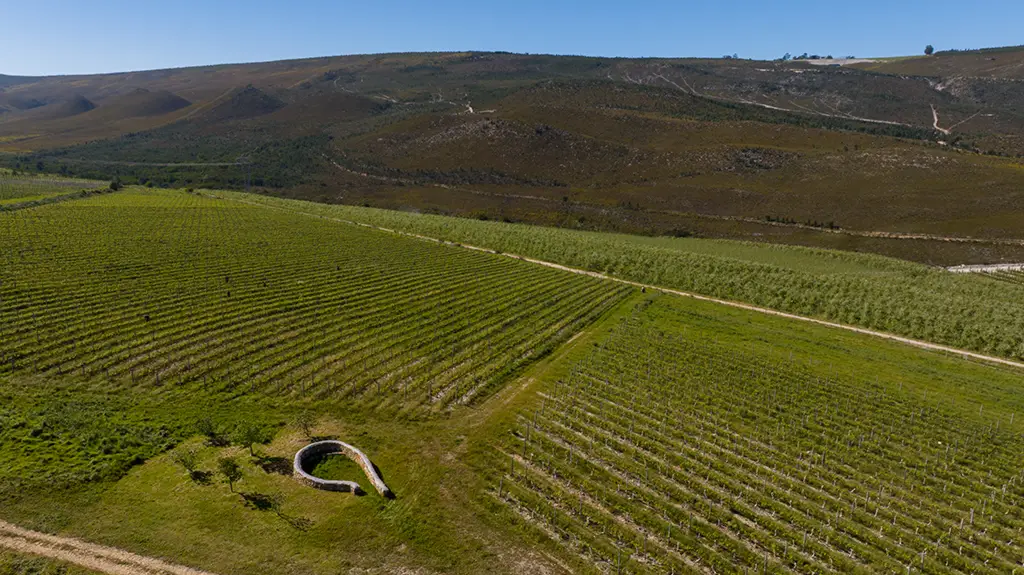
We planted a new Sauvignon Blanc block called Egg. This was inspired by the shape of the vintage and the promise of things to hatch from this special plot. We planted a further 700 trees as part of our Hedge project with the help of UK based Wine Society who partially funded this initiative to plant a screening hedge around the farm, protecting us from spray drift from our conventional neighbors as well as to add biodiversity and encourage insect and animal life on the farm. It’s also really beautiful and that’s important too.
Embroidering plots and plans
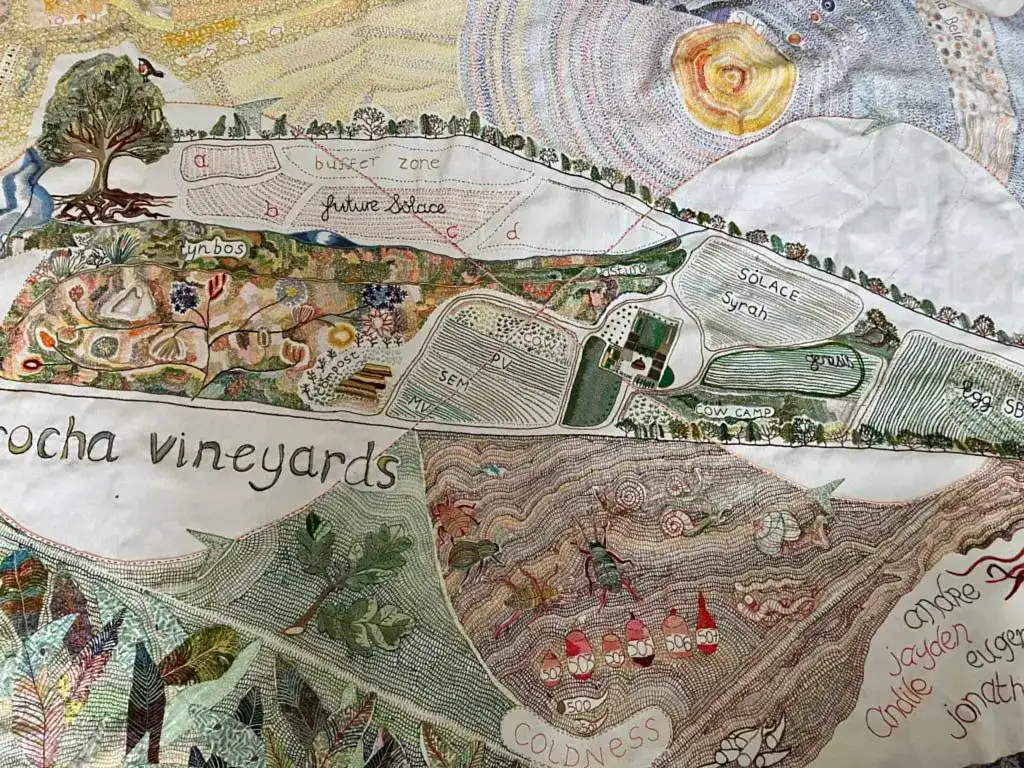
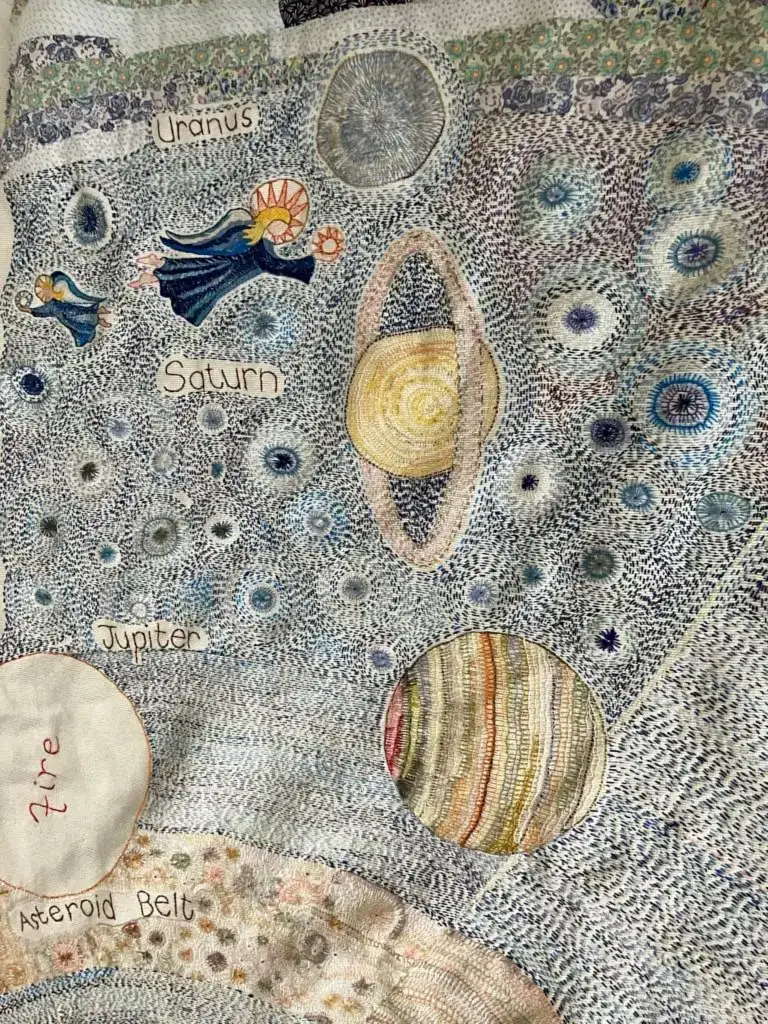
When I’m not on my farm, I take it with me. This project is fondly known as the Tablecloth, a huge piece of canvas on which I am embroidering the map of Brocha, and includes the elements, the vineyard blocks, the solar system, our fynbos conservancy area, compost heaps, the team, the animals and reference to our biodynamic practices as part of the farm organism. It gives me something to do in the many departure lounges of the world and time to consider and plot my next move regarding Brocha and its wines.
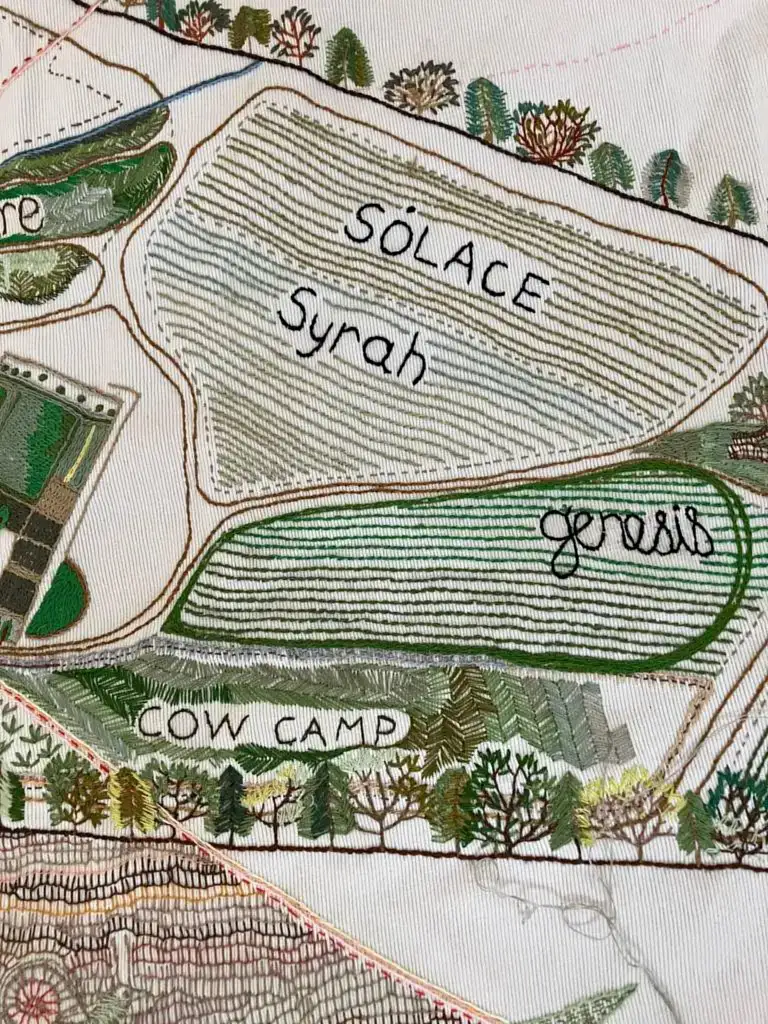
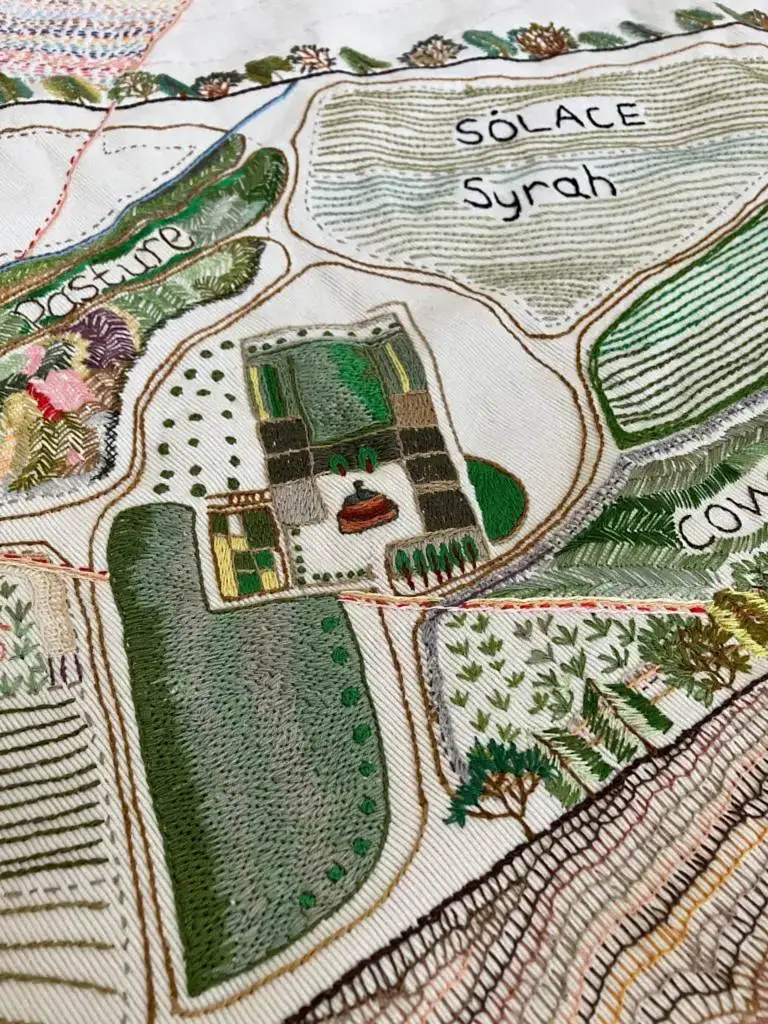
I find it easier to grow wine than to sell it. More reason the wine we do grow and make must be of value and quality. I am interested in human health and as such hope that we will drink less but better wine, wines that exhibit regard for provenance and integrity. Wine that carries the full cost in the bottle, with no further impact on soil and human or animal health further down the line due to overuse of industrial chemicals and toxins. Change is inevitable – I think the new generation will have us questioning our methods and intentions more acutely, which is a good thing and inspiring.
Certification is boring and time consuming but necessary. There are so many outlandish claims in agriculture that the only real guarantee one can provide the consumer with is a third-party certification on the bottle. Brocha’s status is currently that the whole farm unit is Demeter PGS SA certified which is a biodynamic certification, and I am in my third year of organic conversion with Ecocert to attain certification of the wine.
In closing, thank you for your support and I raise a glass to your good health.

Brocha Vineyards